|
Getting your Trinity Audio player ready...
|
Whether you’re driving through International Drive, heading to the theme parks, or commuting across Central Florida, vehicle safety is something every Orlando driver should take seriously. One of the most important safety features in modern vehicles is the airbag—but many people still ask: can an airbag kill you?
According to the National Highway Traffic Safety Administration (NHTSA), frontal airbags have saved more than 50,000 lives in the United States since 1987. They reduce the risk of driver fatalities in frontal crashes by about 29% and front-seat passenger fatalities by approximately 32%.
While airbags are designed to protect you, understanding how they work—and their limitations—can help you stay safer on the road.
How Airbags Work in a Crash
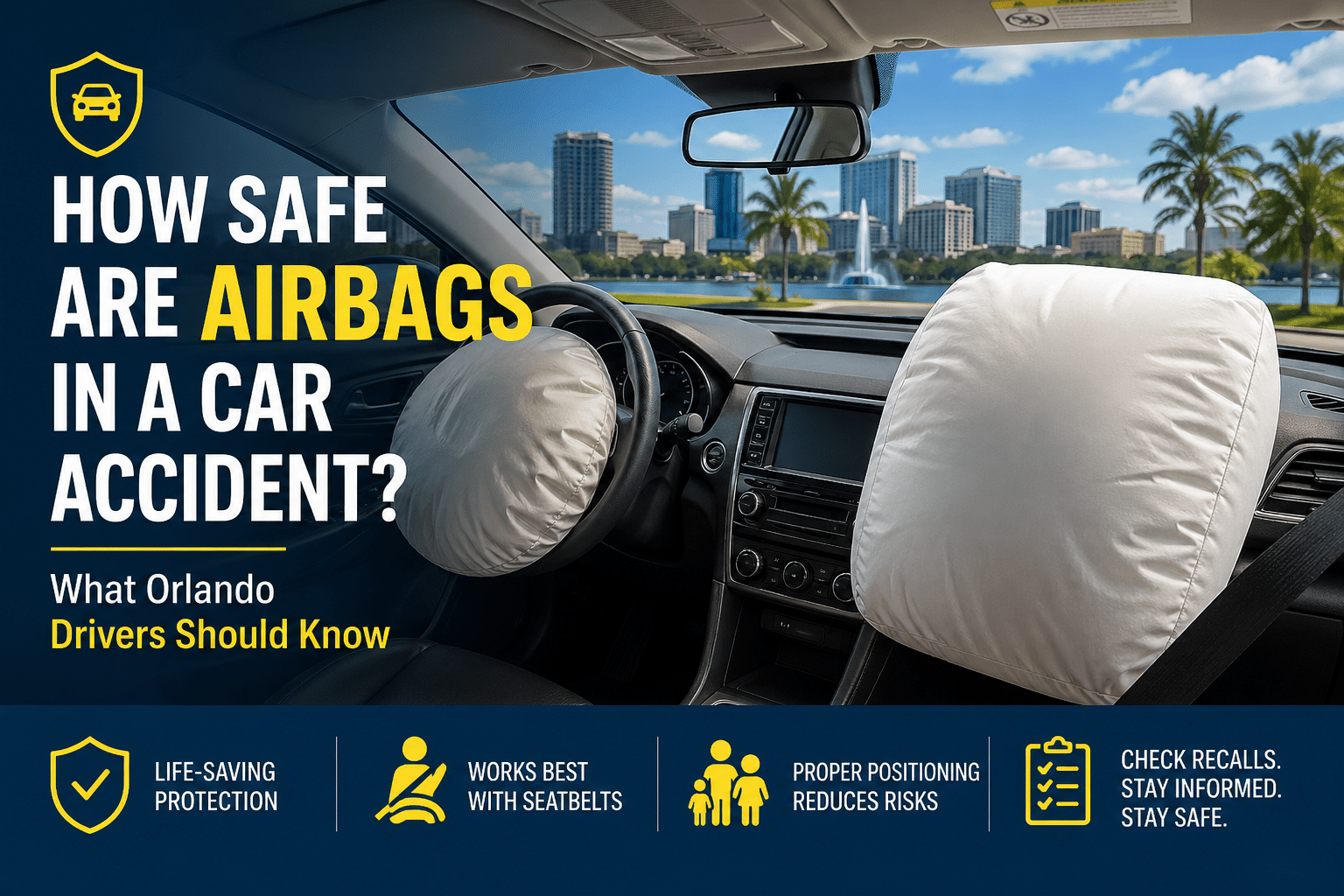
Airbags are part of a larger safety system that works alongside your seatbelt. In moderate to severe crashes, sensors in your vehicle trigger the airbag to inflate in milliseconds.
This rapid inflation creates a cushion that helps prevent occupants from striking hard surfaces like the steering wheel, dashboard, or windshield. Once contact is made, the airbag quickly deflates to absorb energy and reduce impact force.
It’s important to note:
- Airbags typically do not deploy in minor accidents
- Seatbelts remain your primary line of defense
In fact, combining airbags with seatbelts offers the highest level of protection—reducing the risk of death in frontal crashes by up to 61%.
Types of Airbags and What They Protect
Modern vehicles—especially rental cars and newer models common around Orlando—often come equipped with multiple airbag systems:
- Frontal airbags: Protect the driver and front passenger in head-on collisions
- Side curtain airbags: Help protect occupants during side impacts and rollovers
- Side torso airbags: Reduce chest injuries in side collisions
- Knee airbags: Protect lower body areas and prevent sliding under the dashboard
These systems work together to provide layered protection, especially in high-traffic areas like I-4 or busy tourist zones.
If you’re ever involved in an accident, determining liability can still be complex. Even when fault seems obvious, legal guidance may be necessary. As noted by San Fernando Valley car accident lawyer Uriel R. Gdolian, Esq., cases can quickly become more complicated than expected.
How Effective Are Airbags?
Airbags have a strong track record. In 2019 alone, they saved an estimated 4,330 lives, bringing the total to over 70,000 lives saved.
However, context matters.
Between 1990 and 2008, there were over 290 deaths linked to airbag deployment in low-speed crashes. Most of these incidents involved:
- Older vehicles (pre-1998 models)
- Improper seatbelt use or no seatbelt at all
Today’s airbag systems are significantly safer due to improved design, sensors, and deployment controls.
Risks and Who Is Most Vulnerable
While airbags are generally safe, certain groups face higher risks:
- Children under 13: Should always sit in the back seat
- Small adults: May be at risk if sitting too close to the dashboard
- Rear-facing car seats: Should never be placed in front of an active airbag
Side airbags deploy even faster than frontal airbags due to limited space, which can increase risk if passengers are improperly positioned.
Modern vehicles now include advanced sensors that adjust deployment based on occupant size and position, helping reduce injury risk.
Still, minor injuries like burns, bruises, or abrasions can occur during deployment.
Recalls and Maintenance: What Orlando Drivers Should Check
If you drive a used vehicle in Florida, checking for recalls is critical.
One of the most well-known issues is the Takata airbag recall, which has affected tens of millions of vehicles in the U.S. Some of these airbags have been linked to serious injuries and fatalities.
Additionally, in 2024, the NHTSA issued warnings about defective inflators that posed safety risks.
Key tips:
- Always check your vehicle’s recall status
- Replace deployed airbags immediately
- Only use authorized technicians for repairs
How to Position Yourself for Maximum Safety
Proper seating position can make a major difference in how effective airbags are:
- Sit at least 10 inches away from the steering wheel
- Always wear your seatbelt correctly
- Avoid leaning forward or resting against the dashboard
Airbags are designed to work with your seatbelt—not replace it.
Final Takeaway for Orlando Drivers
Airbags have saved tens of thousands of lives and remain one of the most important safety features in modern vehicles. While rare risks do exist, especially with older systems or improper use, today’s technology has made airbags safer and more effective than ever.
If you’re exploring Orlando, renting a car, or simply commuting daily, understanding how your vehicle’s safety systems work can make all the difference.
Stay informed, stay properly positioned, and always buckle up—because safety should be part of every journey in Central Florida.