In the US, the remote work revolution is still underway. Though start-ups and big-city CEOs are putting up a decent fight when it comes to getting US workers back in the office, the appetite for remote work is too strong – and employees are pushing back. The jobs market is a strong reflection of this pushback, with a majority of workers showing a preference for remote or hybrid working.
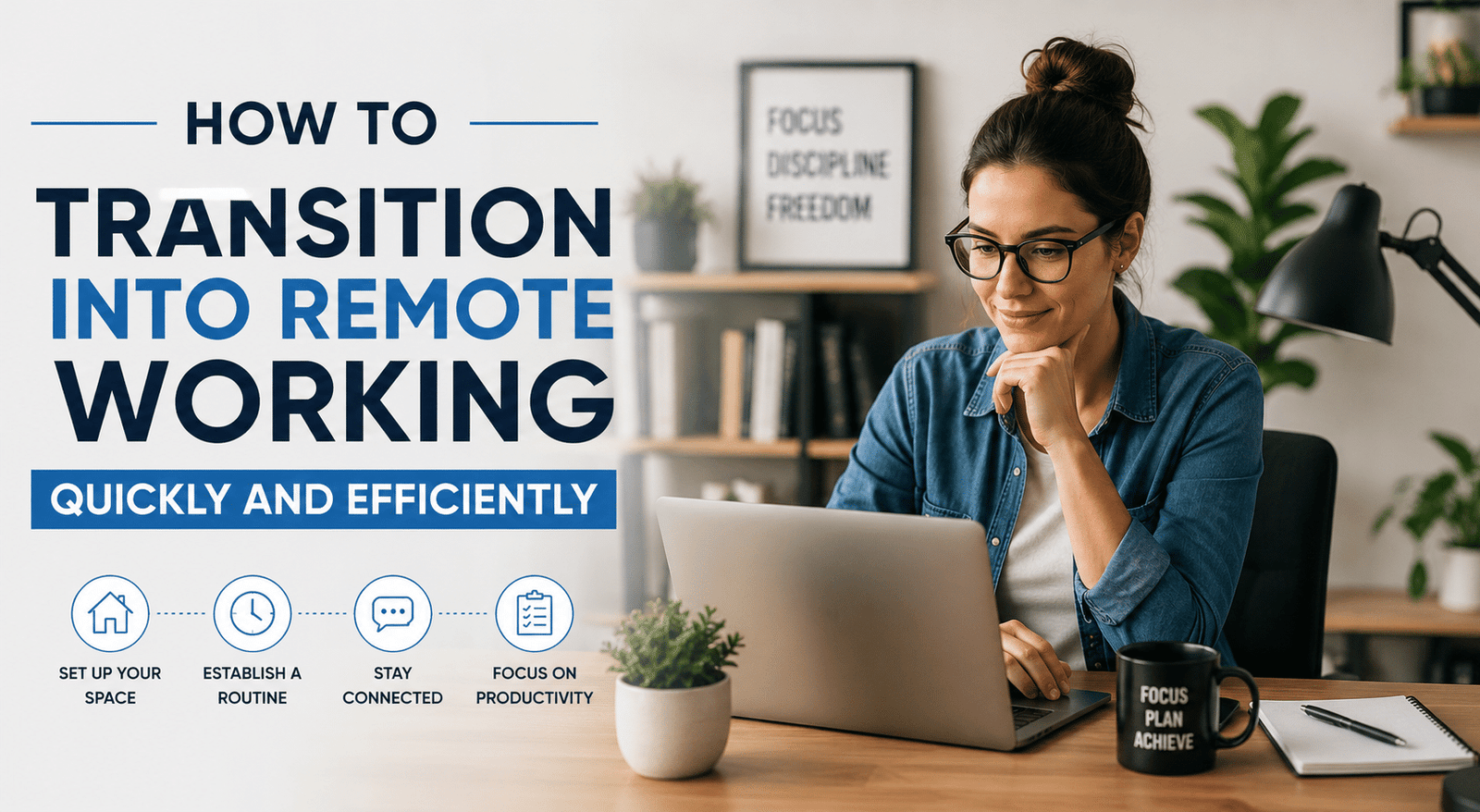
And it’s easy to see why remote working is a preferred arrangement for so many. Working from home is a great way of redressing work-life balance, especially if you previously had long freeway commutes or an unproductive office space. There are also significant financial benefits relating to commutes and food costs. Still, working from home comes with its own set of challenges. Here, we’ll look at the best ways to transition to remote working in order to meet those very challenges.
Create A Dedicated Work Environment
In order to make remote work succeed for you, you need to ensure you have a productive working environment at home. This means creating a dedicated work zone that minimizes distractions and keeps you in the flow. Ideally, this would be a dedicated room in your home, which enables you to close the door and make it obvious to your family or roommates when you’re at work. This workspace should resemble more conventional office cubicle layouts, keeping your core tools easily within reach.
Ensure Secure Access
Security is highly important when working from home, particularly for the fact you’ll be using your own network and handling company data through it. Your employer will have processes for approving your remote working setup and the apps you use within it; still, you need to educate yourself on digital safety in order to prevent data breaches. This means learning the answer to questions like “what is a vpn vs proxy?” and “what makes a strong password?”.
Set A Daily Routine
Just as your environment has to reflect a professional office environment, so too does your routine have to reflect that of an in-office routine. Working at home often means working somewhat flexibly – but there are still strictures relating to core hours, as well as expectations with relation to work monitoring and progress reports.
This is easy for you to manage; simply define a start and stop time for you to stick to and plan your top priorities before you log in for the day. A consistent rhythm reduces decision fatigue and helps teammates know when to expect updates and responses.

Best Crypto Casinos for Live Poker, Baccarat, and Blackjack
Most players don’t realize how wide the gap actually is between a crypto casino that looks legitimate and one that truly is. The best…